Domain names are still one of the most powerful pieces of digital real estate a business or individual can own. A great .com or relevant country-code domain is a global signpost: a way for users, search engines, and applications to discover and trust your presence online. Behind that seemingly simple name, though, sits a layered domain registry ecosystem—root servers, registries, registrars, DNS operators, and policy bodies—that quietly keeps the modern internet running.
Blockchain technology brings a radically different model to this space. Instead of registries and registrars acting as central authorities, a blockchain-based naming system stores ownership records on a distributed ledger. Smart contracts can enforce rules automatically, and wallets replace customer accounts as the ultimate proof of control. This enables features like censorship resistance, one-time purchases instead of recurring renewals, and names that double as wallet addresses or decentralized identities.
Traditional DNS is not going away any time soon; it is battle-tested and deeply embedded into every browser, app, and network. But blockchain-based domain systems are already reshaping expectations about what a “name” can do and what “ownership” should mean in a digital world. The most likely future is not a simple replacement, but coexistence and gradual convergence: hybrid registries, dual identities, and multi-layered forms of value.
This blog takes a deeper dive into how domain registries work today, how blockchain-based alternatives differ, and what that means for brand owners, investors, and builders. Throughout, we’ll highlight where a valuation-focused platform like Valued URLs can help you make disciplined decisions in this new naming landscape.
How Domain Registries Work Today
The Traditional DNS Stack
From a user standpoint, domains feel simple: type a name into the browser and a website appears. In reality, the DNS infrastructure beneath that experience involves several distinct roles and standards working in harmony.
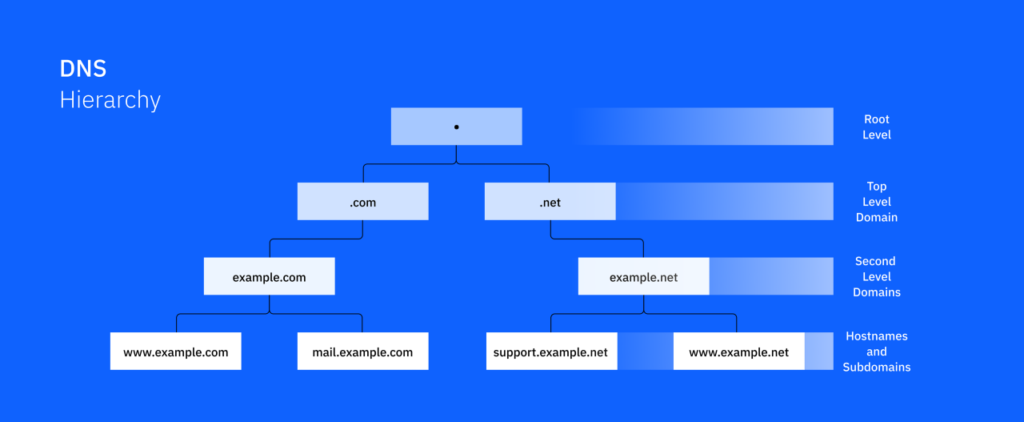
At the top sits the root zone, which lists all recognized top-level domains (TLDs) such as .com, .org, .net, and country codes like .uk or .de. A coordination body delegates operation of each TLD to a registry operator. The registry maintains the authoritative database for all domain names under that TLD—effectively a master list of which second-level domains exist and which nameservers they point to.
Registrars are the customer-facing companies you interact with when you “buy” a domain. They connect to registries via standardized provisioning protocols to perform actions like checking availability, registering domains, updating contact information, or initiating transfers. Many registrars work through resellers or are bundled inside hosting and website-builder platforms, but the core model is the same: the registrar manages your account and passes instructions to the registry.
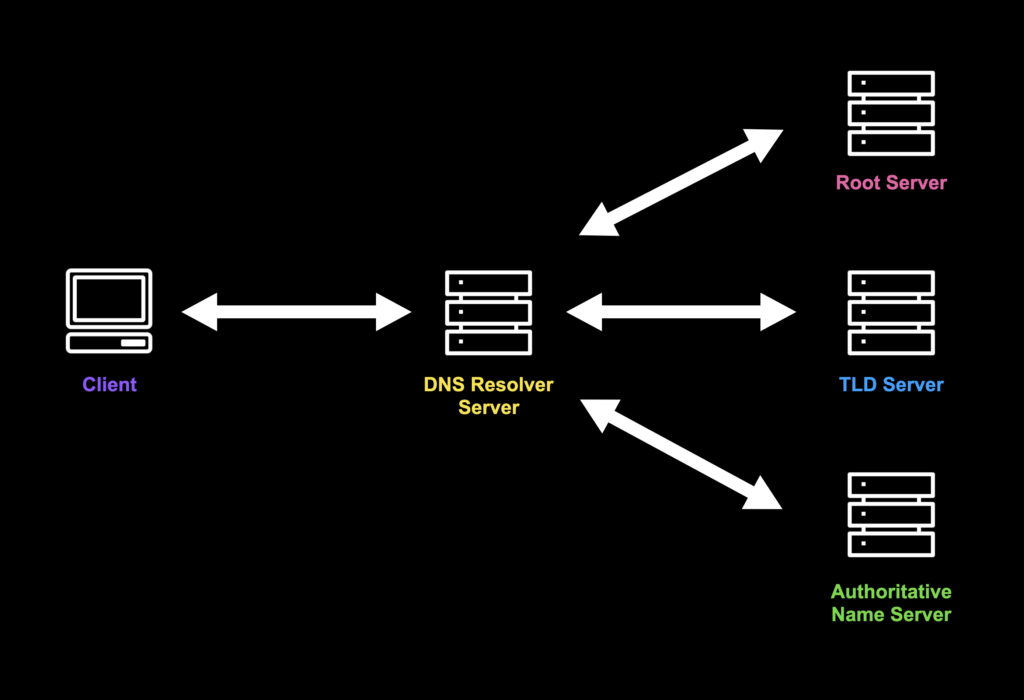
Once a domain is registered, DNS resolvers around the world follow a chain of delegation: root servers direct queries to TLD nameservers, those point to the authoritative nameservers for a specific domain, and those servers respond with the actual resource records (e.g., A or AAAA records for IP addresses, MX for mail, TXT for verification). This whole process usually happens in milliseconds.
Strengths and Limitations of Legacy Registries
The current system has several clear strengths:
Maturity and interoperability: Decades of refinement have made DNS highly interoperable and well-understood across ISPs, CDNs, browsers, and enterprise networks.
Performance and scalability: Modern DNS infrastructure handles billions of queries per day efficiently, with built-in caching systems to reduce latency.
Governance and policy mechanisms: Dispute resolution processes such as UDRP and URS give rights holders formal channels to challenge abusive registrations.
At the same time, some structural limitations are becoming harder to ignore:
Centralized control means registries, registrars, or governments can suspend or seize domains, sometimes with little transparency to end users.
The recurring renewal model feels more like renting than owning, especially to investors and brands who hold names for decades.
WHOIS/RDAP data and related privacy concerns remain complex, creating friction between transparency, compliance, and user protection.
Innovation is constrained by the need to maintain global compatibility; pushing truly novel features into DNS can take years.
These pain points are not fatal flaws, but they create space for other approaches—especially in niches where self-sovereignty, censorship resistance, or programmable logic matter more than universal compatibility.
Blockchain Fundamentals for Domain Registries
Core Concepts Relevant to Naming
Blockchains are distributed ledgers maintained by networks of nodes rather than a single central authority. Instead of a registry operator controlling a database, consensus protocols ensure that all honest participants agree on the state of the ledger. In a naming context, that ledger can store ownership records for domains or identifiers.
Smart contracts are programs that run on the blockchain and govern how these names are created, updated, and transferred. The logic for “register a name,” “check if a name is available,” or “transfer a name from one owner to another” can all be encoded in smart contracts, enforced automatically whenever users interact with the system.
Ownership is tied to cryptographic keys. If a wallet address is recorded as the owner of a name, anyone controlling the corresponding private key can update or transfer that name. There is no customer support department that can override the ledger; control is purely cryptographic.
This trio—distributed ledger, smart contracts, and public-key ownership—creates a very different registry model: one where rules are transparent and programmable, and where trust shifts from organizations to protocols.
What “Decentralization” Really Means Here
It is important to unpack “decentralization” in this context, because the term is often used loosely. A blockchain naming system can be decentralized in some dimensions and centralized in others:
The infrastructure can be decentralized if many independent nodes maintain the ledger and validators are geographically and politically distributed.
Governance can still be relatively centralized if a single company controls the upgrade path of key contracts or owns the primary interfaces users rely on.
Naming policies—such as reserved names, dispute processes, or premium pricing—can be encoded in smart contracts or decided off-chain.
In practice, most real-world systems operate on a spectrum. Some aim to minimize centralized control by placing governance decisions in the hands of token holders or DAOs. Others take a more pragmatic approach, using blockchain for transparent record-keeping while retaining familiar governance structures to meet business requirements and regulatory expectations.
Understanding where a particular naming system sits on this spectrum is crucial for brands and investors. It informs questions like: Who can change the rules? How easily could a name be revoked? Is there a recourse mechanism if something goes wrong?
Technical and UX Constraints
For all their promise, blockchain-based registries face real-world constraints:
Transaction fees: Registering or updating names often requires on-chain transactions, which incur fees that can fluctuate with network congestion.
Latency: Confirmation times can range from seconds to minutes, which is acceptable for ownership changes but less ideal for frequent updates.
Key management: Losing access to a wallet can mean losing control of names permanently, with no password reset option.
Limited native support: Mainstream browsers and operating systems are only beginning to integrate blockchain naming. Many users still need extensions, special resolvers, or gateway services.
These constraints are gradually being mitigated through scalability improvements, better wallet UX, and deeper integration into browsers and operating systems. But for now, they shape where blockchain naming is most attractive: high-value identity, payments, and Web3-native experiences, rather than every casual landing page.
Blockchain Domain Systems Today
Web3 Naming in Practice
Several prominent blockchain-based naming systems have demonstrated what this new paradigm looks like in practice. While the technical specifics differ, most share a few core features:
Names are minted or registered as on-chain assets (often non-fungible tokens).
Ownership and metadata (such as associated wallet addresses or content hashes) are stored on the blockchain.
Users interact with the system through Web3 wallets and dApps instead of traditional registrar accounts.
Names can be transferred like any other token, often via standard marketplaces.
In many cases, these names serve multiple roles at once. A single identifier might function as a wallet address, a username in decentralized applications, and a pointer to website content stored on a distributed storage network. This multi-functionality is one of the main ways blockchain-based domains go beyond traditional DNS.
How Resolution Differs from DNS
Traditional DNS resolution is entirely off-chain. When a user types a domain name into a browser, recursive resolvers query a series of nameservers until they reach the authoritative server and retrieve the relevant records. The logic and state live in DNS infrastructure, not in a public ledger.
Blockchain domains introduce additional layers:
On-chain contracts act as the source of truth for ownership and mappings—e.g., “this name resolves to this wallet address and this content hash.”
Specialized resolvers or gateways query the blockchain (or an indexer) to read those mappings and translate them into something applications can use.
Browser integration can be native (built into the browser) or plugin-based. Some systems also map blockchain names into the DNS space via special TLDs or gateway services.
The result is a resolution mechanism that is more programmable and transparent, but also more fragmented and dependent on client behavior. As native support improves, the experience will feel more “DNS-like” to end users, but under the hood the path from name to content will remain quite different.
Emerging Use Cases
The most compelling use cases emerging so far cluster around identity, payments, and censorship resistance:
Human-readable wallet addresses reduce errors and friction when sending funds, especially across borders or in high-frequency contexts.
Personal or brand profiles built on decentralized identifiers can aggregate wallets, NFTs, social handles, and verifiable credentials under a single name.
Decentralized websites, while still niche, leverage blockchain domains plus distributed storage to create content that is harder to take down via traditional legal or infrastructure channels.
Communities and projects use names as access credentials, membership markers, or governance identities, tying on-chain behavior to recognizable labels.
For now, these use cases are strongest among crypto-native users. But as wallets and blockchain infrastructure move into mainstream financial apps and consumer products, the underlying naming systems will become more relevant to broader audiences.
The Future of Domain Registry Technology
Hybrid Registries: Bridging DNS and Blockchain
The most realistic medium-term path is not a sudden migration away from DNS, but the rise of hybrid registries that use blockchain in the background and offer blockchain-linked names in the foreground.
At the infrastructure level, a registry could:
Mirror ownership records for DNS domains on a blockchain, creating a transparent, tamper-evident ledger of registrations and transfers.
Anchor DNSSEC keys or other security-critical data on-chain to provide cryptographic proofs outside the traditional DNS ecosystem.
Expose on-chain interfaces for registrars, enabling automated, auditable interactions across registrars and resellers.
At the product level, registries and registrars might offer domain packages that include:
A traditional DNS domain (e.g., example.com).
A corresponding blockchain-based identity or domain mapping (e.g., example on a Web3 naming system).
Tooling to keep the two in sync, so that ownership changes or branding updates propagate consistently across both environments.
Such hybrid models preserve the reach and compatibility of DNS while tapping into the programmability and verifiability of blockchain.
Smart-Contract-Driven Policies
Registries have always had policies: pricing tiers, reserved names, sunrise and landrush phases, eligibility criteria, and so on. Smart contracts allow many of these policies to be codified and enforced automatically.
Imagine, for example:
A premium domain auction where bids and allocations are handled entirely by a contract, with transparent rules and outcomes.
A namespace governed by a DAO, where token holders vote on whether certain categories of names should be reserved or restricted.
Subdomain ecosystems where brands programmatically issue and revoke secure identities for customers, partners, or internal teams.
This move from static policies to dynamic, programmable rules opens up new business models and governance experiments. It also demands careful security review, since bugs in contracts can have permanent, public consequences.
Security, Trust, and Compliance
Security is both a selling point and a challenge for blockchain registries. On one hand, storing ownership on an immutable ledger makes it harder for unauthorized parties to alter records without detection, and easier to provide transparent histories of ownership and configuration changes. On the other hand, the attack surface includes:
Smart contract vulnerabilities that can allow name hijacking or unauthorized transfers.
Social engineering attacks that target private keys instead of account credentials.
Look-alike or homograph names registered in alternative naming systems, creating new phishing opportunities.
Compliance and legal frameworks will also evolve. Regulators, rights holders, and governance bodies will need to decide:
How traditional trademark protections extend into blockchain namespaces.
What constitutes “jurisdiction” when records are distributed globally.
Whether and how to standardize cross-system dispute mechanisms.
Enterprises evaluating blockchain-based registries should treat them as part of a broader security and compliance strategy, not as isolated experiments.
Impact on Brands and Enterprises
For brands, the rise of blockchain naming is both an opportunity and a risk:
Opportunities include richer identity layers (names that carry verifiable attributes), new channels to engage Web3 communities, and novel forms of loyalty or membership tied to names and associated tokens.
Risks include confusion if multiple, incompatible namespaces carry the same or similar brand strings, as well as the burden of defensive registrations across more systems.
Forward-looking organizations can start by mapping their existing naming assets, identifying where their brand appears—or could be misused—in major blockchain naming systems, and developing policies for registration, usage, and monitoring. Integrating those policies into broader digital asset management practices will help avoid ad hoc decisions later.
Investment and Valuation in a Multi-Registry World
Rethinking “Premium Domains” in the Web3 Era
Traditional domain valuation relies on factors like length, clarity, brandability, search volume, and historical comparable sales. These signals remain highly relevant for DNS domains, especially those aimed at mainstream audiences and SEO-driven traffic.
Blockchain-based names add new dimensions:
Utility within specific ecosystems: a name that is deeply integrated into a popular DeFi protocol or social dApp may command a premium even if it has limited general familiarity.
Network effects: names in extensions associated with strong communities or chains can benefit from the overall growth of that ecosystem.
On-chain history: addresses or names with a rich transaction history, significant governance participation, or association with notable projects could carry reputational value.
Investors will increasingly need to distinguish between “legacy value” (reach, search, brand familiarity) and “on-chain value” (identity, utility, embeddedness in protocols). The most valuable names may be those that can straddle both worlds effectively.
Liquidity and Marketplaces
One of the immediate advantages of tokenized names is their integration into broader digital asset markets. Instead of relying solely on specialized domain marketplaces, owners can:
List names on general NFT platforms, benefiting from existing liquidity and user bases.
Use DeFi protocols to collateralize or fractionalize high-value names, unlocking capital without full sale.
Program leases or revenue shares via smart contracts, automating aspects of monetization that are difficult in the DNS world.
This shift could increase market transparency, as pricing and transaction histories become more visible on-chain. It could also amplify volatility, exposing domain assets to broader crypto market cycles.
Where Valued URLs Fits
In a landscape where names can exist simultaneously in DNS and on multiple blockchains, valuation becomes more complex—but also more valuable. A platform like Valued URLs is well positioned to:
Combine traditional domain metrics (traffic signals, keyword data, sales comps) with blockchain-specific indicators (on-chain activity, protocol integrations, community traction).
Help investors and brands allocate capital intelligently between established DNS assets and emerging blockchain-based names, rather than chasing hype blindly.
Provide portfolio analytics that treat names as part of a unified digital asset stack, even when they live on different technical layers.
For sophisticated investors and corporate strategists, this kind of cross-layer view may become essential.
Practical Guide: What Should Readers Do Now?
For Brand Owners and Marketers
If you manage a brand’s digital presence, consider a structured approach:
Discovery: inventory your current domains and social handles, then check for existing registrations of your core marks in major blockchain naming systems.
Prioritization: identify names that pose high risk if controlled by others (e.g., exact brand matches) and those that could enable future opportunities (e.g., product lines, campaign identifiers).
Governance: define who within your organization is allowed to register blockchain domains, how wallets are managed, and how these names are used in marketing and product experiences.
Experimentation: pilot use cases that add clear value—such as a verifiable customer portal tied to a blockchain identity, or a loyalty program that recognizes certain names or tokens.
The goal is not to claim every possible name on every chain, but to protect your core identity and position yourself to take advantage of emerging opportunities.
For Domain Investors
Investors should recognize that blockchain naming is still early and unevenly developed across chains and ecosystems. Sensible steps include:
Allocating a modest portion of your capital to blockchain names, treating them as higher-risk, higher-variance positions.
Focusing on timeless, versatile words and phrases rather than highly speculative extensions that may not persist.
Tracking usage and adoption metrics for various naming systems, rather than assuming all will achieve similar relevance.
Being clear about your thesis: are you betting on general Web3 identity, on a specific chain’s growth, or on particular use cases like gaming or DeFi?
As tools like Valued URLs evolve to ingest on-chain data, investors will be able to compare DNS and blockchain holdings more systematically, rather than treating them as separate worlds.
For Technologists and Builders
For builders, blockchain-based registries open rich opportunities:
Infrastructure: resolvers, gateways, and libraries that make it easier for apps and browsers to integrate multiple naming systems smoothly.
Security: monitoring tools that detect suspicious registrations or configuration changes across DNS and blockchain namespaces.
Analytics and valuation: APIs and dashboards that surface meaningful metrics across layers and help both technical and non-technical users understand what their names are worth and how they are being used.
Partnering with valuation-oriented platforms such as Valued URLs can help ensure these tools address real decision-making needs rather than purely speculative interests.
Scenarios for the Next 5–10 Years
Conservative Scenario: DNS Dominance Continues
In a conservative scenario, DNS remains the default for most consumer and enterprise use cases. Blockchain naming sees limited adoption, mostly serving crypto enthusiasts who want human-readable wallet addresses. Traditional registries selectively adopt blockchain for backend audit trails or proof-of-integrity features, but the user experience looks almost unchanged. For most organizations, blockchain naming remains an optional add-on.
Moderate Scenario: Dual-Stack Naming Becomes Normal
In a moderate scenario, a handful of blockchain naming systems reach sufficient maturity and browser support to become everyday tools for a meaningful minority of users. Many brands and individuals maintain both a DNS domain and a blockchain identity, and apps start to ask for “your Web2 and Web3 names” as a matter of course. Registries offer integrated packages, and valuation tools standardize metrics across both types of names. This dual-stack world requires more active management but also opens more strategic options.
Transformative Scenario: Web3-Native Identities at Scale
In a more transformative scenario, blockchain-based identities become a core layer in online life. Names on blockchains are used for authentication, payments, access control, and reputation systems across many applications. DNS still exists as a routing layer, but identity logic moves heavily on-chain. In this world, the distinction between a “domain,” a “username,” and a “wallet address” blurs, and registry technology is fundamentally about managing rich, portable identities.
Conclusion
Blockchain is not here to simply overthrow DNS, it is here to expand what naming and identity can do. By introducing verifiable ownership, programmable policies, and multi-purpose identifiers, blockchain-based registries challenge long-standing assumptions about how domains are managed and what it means to “own” a name.
For brands, investors, and builders, the most strategic move is not to pick a winner prematurely, but to understand the strengths and trade-offs of both systems and prepare for coexistence. Mapping your current assets, experimenting with well-chosen blockchain names, and leveraging a valuation-focused partner like Valued URLs can help you navigate this transition thoughtfully.
For the latest information regarding premium domains available, visit us at: www.valuedurls.com
FTC LEGAL DISCLOSURE – Some links found in this guide are affiliate links, meaning that we will make a commission on purchases you make through the links, at no extra cost to you. We only recommend products and services that we personally like and trust.